Indonesia's New Pre-Shipment Halal Inspection Rule: What It Means for Exporters- October 01, 2026
Indonesia's Halal Product Assurance Agency (Badan Penyelenggara Jaminan Produk Halal, BPJPH) enacted Regulation No. 4 of 2026 on Ensuring the Compliance of Foreign Halal-Certified Products Entering Indonesia.
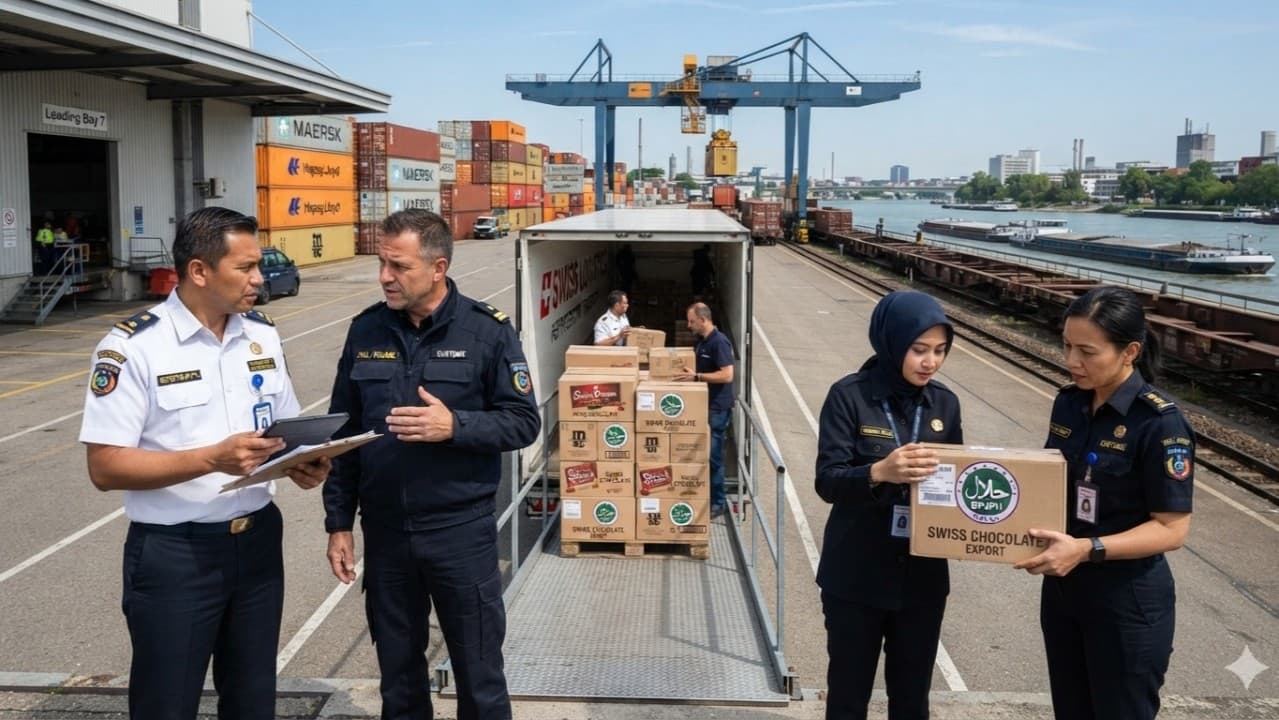
A Detailed Analysis of BPJPH Regulation No. 4 of 2026 and Its Practical Implications
Introduction
In August 2026, Indonesia's Halal Product Assurance Agency, Badan Penyelenggara Jaminan Produk Halal (BPJPH), enacted Regulation No. 4 of 2026 on Ensuring the Compliance of Foreign Halal-Certified Products Entering Indonesia. This regulation, which took effect on 10 September 2026, introduces a mandatory pre-shipment conformity inspection regime for imported halal products. The rule represents a fundamental shift in how Indonesia verifies the halal status of foreign products—moving the physical inspection from the point of entry to the country of origin, before the goods are even shipped.
This article examines the regulation's requirements, its impact on manufacturers and exporters, the practical challenges of implementation, and the cost implications for product competitiveness in the Indonesian market.
Part 1: The Regulatory Framework and Its Requirements
1.1 Legal Basis and Policy Objectives
The regulation derives its authority from Law No. 33 of 2014 on Halal Product Assurance, which mandates that products entering, circulating, and traded in Indonesia must be halal-certified. This was reinforced by Government Regulation No. 42 of 2024, which established a phased timeline for mandatory halal certification, culminating in the full enforcement deadline of 17 October 2026 for imported food, beverages, cosmetics, pharmaceuticals, and other covered products.
BPJPH Head Ahmad Haikal Hasan framed the regulation as an expression of national sovereignty: "We cannot just be a market. We must have the ability to ensure that incoming products meet the provisions of the Halal Product Assurance Law. This is part of the nation's independence and dignity in protecting our people."
The policy explicitly rejects the characterization of halal verification as a trade barrier. According to the Ministry of Trade, "The halal mandate is not a prohibition or restriction on imports, but a strengthening of quality assurance, hygiene, and transparency for all Indonesian consumers."
1.2 The Core Mechanism: Pre-Shipment Conformity Assurance
Where the inspection happens: Unlike traditional import inspection regimes, BPJPH Regulation No. 4/2026 requires that conformity assurance be conducted in the country of loading and/or country of origin, specifically "directly at the loading warehouse before shipment". This means the physical verification occurs before the goods leave the manufacturer's or exporter's premises.
Who conducts the inspection: The inspection is performed by Inspection Agencies (Lembaga Inspeksi) appointed by BPJPH. These agencies must meet stringent requirements, including:
- Accreditation by Indonesia's National Accreditation Committee (KAN) as an inspection body
- Certifications in ISO 9001, ISO 17020, ISO 17029, ISO 27001, and ISO 37001
- At least four competent verifiers with halal product knowledge
- A head office in Indonesia, and either a branch office abroad or a partner inspection agency abroad
This requirement for foreign presence is critical: it means that exporters in Switzerland, for example, can only be inspected if an approved Indonesian Inspection Agency has established a branch or partnership in their country.
What the inspection covers: The physical inspection must verify at minimum:
- Conformity of administrative data and documents
- Product identity against the halal certificate or foreign registration attachment
- Validity of the halal certificate number on product packaging
- HS code classification against Indonesia's list of products requiring halal certification
- Quantity, volume, production code, production date, and units against purchase invoices
- Compliance with Halal Label or Non-Halal Statement requirements
- Contamination risk assessment for fresh animal-origin and processed products where halal and non-halal products were stored or loaded without separation, or where distribution equipment was previously used for non-halal products
- Conformity of slaughter date and related information for halal-slaughtered meat products
Output of the inspection: The result is documented in a Halal Product Assurance Report (Laporan Pemastian Produk Halal, LPPH), which is:
- Issued electronically through BPJPH's integrated system
- Valid for one shipment only
- Exchanged electronically with Indonesia's National Single Window (SINSW) for customs clearance
1.3 The Application and Timing Process
The application flow is as follows:
- The Indonesian importer submits an application through BPJPH's integrated electronic system.
- The importer selects an authorized Inspection Agency.
- The Inspection Agency verifies document completeness and calculates the fee.
- BPJPH issues an invoice; the importer pays 100% of the fee.
- The importer/exporter provides information on the planned inspection schedule within 30 calendar days of payment.
- The Inspection Agency completes the inspection within 15 calendar days, with a possible 15-day extension.
- The LPPH is issued and linked to customs.
Critical implication: The 30-day scheduling window and 15-day inspection window create a de facto lead time of approximately 45–60 days between payment and inspection completion, before shipping can even occur. This must be built into production and logistics planning.
Part 2: Impact on Manufacturers and Exporters
2.1 Which Products Are Affected
The regulation applies to all products subject to Indonesia's mandatory halal certification, including:
- Food and beverages
- Natural drugs, quasi-drugs, and health supplements
- Cosmetics
- Chemical products
- Genetically engineered products
- Clothing and certain household goods
- Class A medical devices
Products made from prohibited (haram) materials are exempt from halal certification but must carry a Non-Halal Statement—and may still require conformity assurance before import declaration.
Exclusions include personal passenger goods, non-commercial shipments, samples for testing, and transit/transhipment goods, provided they are not distributed or traded in Indonesia.
2.2 The Mutual Recognition Agreement (MRA) Prerequisite
A fundamental requirement is that the foreign halal certificate must be issued by a Foreign Halal Institution (Lembaga Halal Luar Negeri, LHLN) that has signed a Mutual Recognition Agreement (MRA) with BPJPH. As of June 2025, Indonesia had signed MRAs with 87 foreign halal certification bodies across 32 countries. By September 2026, this had grown to include additional bodies from Vietnam, Australia, and elsewhere.
For Swiss exporters: This means that if your halal certifier is not on BPJPH's recognized list, your certificate will not be accepted—regardless of the certifier's reputation or credentials. You must either switch to an MRA-recognized certifier or pursue BPJPH certification directly (which is significantly more costly and burdensome).
2.3 The Warehouse Access Requirement
The most operationally disruptive requirement is that inspection must occur at the loading warehouse in the country of origin before shipment. For manufacturers, this means:
- Allowing foreign inspection personnel access to their production or storage facilities
- Coordinating inspection timing with production schedules and shipping logistics
- Ensuring that the specific shipment to be inspected is available and identifiable at the time of inspection
- Potentially holding goods at the warehouse until inspection is completed and the LPPH is issued
This is not a document review conducted remotely. It is a physical, on-site verification that creates a new bottleneck in the export process.
Part 3: Implementation Challenges
3.1 Limited Inspection Agency Coverage Abroad
BPJPH Regulation No. 4/2026 requires Inspection Agencies to have either a foreign branch office or a partner inspection agency abroad. However, the number of Indonesian Inspection Agencies with established foreign operations is currently limited. This creates several problems:
Geographic gaps: Exporters in countries without an approved Inspection Agency presence cannot comply with the regulation. They must either wait for an agency to establish operations or find alternative routes (such as shipping through a country that does have coverage—which may not be economically viable).
Capacity constraints: Even where an Inspection Agency has a foreign presence, its capacity to conduct physical inspections across multiple exporters and product categories may be limited. Delays are likely during peak periods or for specialized product types.
Coordination complexity: The regulation requires private Inspection Agencies to coordinate with state-owned Inspection Agencies. This multi-layered structure adds administrative complexity and potential delays.
3.2 The 30-Day Scheduling Requirement
The importer must provide the inspection schedule within 30 calendar days of payment. If no information is provided within this window, the application is rejected and the fee is refunded. While this protects importers from indefinite delays, it also creates a hard deadline: if the exporter cannot arrange for the goods to be ready and the warehouse to be accessible within 30 days, the entire application must be restarted.
This rigid timeline is difficult to reconcile with the realities of international shipping, where production schedules, container availability, and vessel bookings often shift. A missed window means losing the application fee and starting over.
3.3 Document Consistency Requirements
The inspection verifies consistency between numerous documents and the physical goods:
- Halal certificate number on packaging
- HS codes against Indonesia's positive list
- Production codes and dates against purchase invoices
- Quantity and units against order documents
- Certificate of Analysis, Certificate of Origin, and MSDS for non-halal statement products
Any discrepancy—a transposed digit in a production code, a label variation between the certified version and the actual packaging, or an HS code mismatch—can result in a finding of non-conformity. This places a heavy burden on exporters to ensure perfect alignment across all documentation and physical products before inspection.
3.4 The "Same Country as Production" Rule
The regulation requires that products with a foreign halal certificate be registered and issued by an LHLN originating from the same country as the production location, and that the LHLN has an MRA with BPJPH. This means, for example, that a product manufactured in Switzerland must be certified by a Swiss LHLN (or one with operations in Switzerland) that has an MRA with Indonesia. A certificate from a certifier in another country—even one with an MRA—will not be accepted for a product produced in Switzerland.
This "country-of-production" rule adds another layer of complexity for multinational manufacturers with production facilities in multiple countries. Each production location requires certification from an LHLN in that country, creating a fragmented certification landscape.
3.5 Trade Partner Concerns
The regulation has drawn scrutiny from Indonesia's trading partners. At the WTO Committee on Technical Barriers to Trade, the United States, European Union, India, Switzerland, Australia, and Canada have all raised concerns about Indonesia's halal certification implementation. The primary issues include:
- The burden of pre-shipment inspection in the country of origin
- The limited number of recognized certifiers and inspection agencies
- The cost and time implications for exporters
- Questions about whether the measures are more trade-restrictive than necessary
Indonesia has consistently defended the measures as consumer protection and quality assurance, not trade barriers.
Part 4: Cost Impact on Products and Competitiveness
4.1 Direct Certification and Inspection Costs
Foreign halal certificate registration: The fee for registering a foreign halal certificate with BPJPH is IDR 800,000 (approximately EUR 46) per application. The certificate is valid for four years.
Inspection costs: The regulation establishes that the importer bears the Halal Product Assurance tariff, which is determined by BPJPH. However, specific tariff amounts for the pre-shipment inspection under Regulation No. 4/2026 have not yet been publicly announced. The regulation states that the tariff will be proposed by the Head of BPJPH to the Minister of Finance, and until it is set, tariffs will be determined through cooperation agreements.
Based on the existing tariff structure for halal certification services, the maximum unit cost for product inspection by an Inspection Agency for foreign businesses is set at:
| Product Category | Maximum Unit Cost (IDR) |
|---|---|
| Products on positive list / simple processes | 3,000,000 |
| Processed food, chemical, microbial products | 6,468,750 |
| Flavour and fragrance | 7,652,500 |
| Genetically engineered products | 5,412,500 |
| Drugs, cosmetics, biological products | 5,900,000 |
Source: BPJPH tariff schedule
For a typical processed food product, the inspection cost alone could reach IDR 6.5 million (approximately EUR 375). This is per inspection—which is per shipment. For exporters shipping multiple consignments per year, these costs multiply rapidly.
4.2 Hidden and Indirect Costs
Beyond the official fees, exporters face significant indirect costs:
Inspection agency travel and accommodation: The physical inspection requires personnel to travel to the exporter's warehouse in the country of origin. While the regulation does not explicitly state who bears these costs, in practice, these expenses are likely to be passed on to the importer or exporter. For a Swiss exporter, this could mean covering travel and accommodation for Indonesian inspection personnel—costs that could easily exceed the official inspection fee.
Warehouse holding costs: Goods must be held at the loading warehouse until inspection is complete and the LPPH is issued. This delays shipment and incurs storage costs, as well as potential demurrage or detention charges if containers are delayed.
Administrative and compliance overhead: Ensuring document consistency, coordinating inspection schedules, and managing the application process requires dedicated staff time and potentially external consultants. For companies new to the Indonesian market, the learning curve is steep.
Opportunity cost of delays: The 45–60 day lead time for inspection means that goods cannot be shipped immediately after production. This ties up working capital and delays revenue recognition.
4.3 Impact on Product Competitiveness
For high-value or low-volume products: The fixed costs of inspection and certification may be absorbable. A shipment of premium Swiss chocolates or specialty cheeses with a high per-unit value can absorb an additional EUR 375–500 in inspection costs without significantly eroding margins.
For commodity or price-sensitive products: The situation is very different. Consider a shipment of processed food products with a total value of EUR 20,000. An inspection cost of EUR 375–500 represents 2–2.5% of the shipment value. Combined with the indirect costs of delays and administrative overhead, the effective cost could rise to 5% or more. In price-competitive categories, this could make Swiss products uncompetitive against suppliers from countries with lower compliance costs—or against domestic Indonesian products that face a different (and generally lower) certification burden.
For small and medium-sized exporters: The fixed costs and administrative complexity create a disproportionate barrier. A large multinational with dedicated regulatory affairs staff and established relationships with inspection agencies can absorb the burden. An SME exporting to Indonesia for the first time may find the process prohibitively complex and expensive.
Comparative disadvantage: While the regulation applies equally to all foreign exporters, its practical impact varies by country of origin. Exporters in countries with established Inspection Agency presence and streamlined MRA processes face lower friction. Exporters in countries without such infrastructure—including potentially Switzerland, depending on Inspection Agency coverage—face higher costs and delays.
4.4 The Value Proposition: Halal as a Premium
It is important to note that halal certification can also be a source of competitive advantage. Indonesian consumers place high value on halal assurance: a 2023 Populix survey found that 83% of respondents considered the halal logo a primary factor in product selection, rising to 93% for food products. Products with verifiable halal credentials can command premium positioning and consumer trust.
For exporters willing to invest in compliance, the Indonesian market offers significant opportunities. Indonesia has a population of over 270 million, with a rapidly growing middle class and increasing demand for certified halal products—not only for religious reasons but as a marker of quality, hygiene, and ethical sourcing.
The question is whether the cost and complexity of compliance are justified by the market opportunity for each individual exporter and product category.
Conclusion
BPJPH Regulation No. 4 of 2026 represents a significant escalation in Indonesia's halal regulatory regime. By mandating pre-shipment physical inspection in the country of origin, Indonesia has created a new compliance checkpoint that adds cost, time, and complexity to the export process.
For manufacturers and exporters, the key takeaways are:
- Verify MRA status: Confirm that your halal certifier is recognized by BPJPH and originates from the same country as your production facility.
- Plan for extended lead times: Budget 45–60 days for the inspection process before shipment can occur.
- Ensure document consistency: Any discrepancy between certificates, labels, invoices, and physical goods can derail the inspection.
- Assess cost impact: Calculate the per-shipment inspection cost and indirect expenses against your product margins and shipment values.
- Consider market strategy: Determine whether the Indonesian market justifies the compliance investment, and whether halal certification can be leveraged as a premium positioning tool.
For the broader trade relationship, the regulation raises legitimate questions about proportionality and trade facilitation. While Indonesia has the right to establish halal standards for products entering its market, the practical implementation—limited Inspection Agency coverage, rigid timelines, and unclear tariff structures—creates friction that may disproportionately affect smaller exporters and countries without established halal infrastructure.
The coming months, as the 17 October 2026 full enforcement deadline approaches, will test whether BPJPH can scale its inspection capacity, clarify cost structures, and ensure that the system functions as a quality assurance mechanism rather than an inadvertent trade barrier.
Badan Penyelenggara Jaminan Produk Halal (BPJPH)
Office Locations
Halal Certification Services (HCS) certifies companies all over the world. Our locally-based auditors can speak and assist in your local languages. Find the contact details of our offices nearest to you as mentioned below: